
From Oulu to Wall Street: The Oura Growth Story
Origins in Oulu
Oura was founded in 2013 in Oulu, in northern Finland, by Petteri Lahtela, Kari Kivelä, and Markku Koskela — three engineers who had each spent years in the city's technology sector, including stints at Nokia and Polar. Lahtela had spent over a decade in mobile and telecom product development before turning his attention to health; he later described Oura's founding insight plainly: there was no simple, comfortable way to understand how the body actually recovers from daily stress. Rather than building another activity tracker, the founders bet specifically on sleep — a data source that applies to nearly everyone, every day, regardless of fitness level. The company's original working name, Jouzen, was derived from the Finnish word for swan, the national bird; it was changed to Oura before launch.
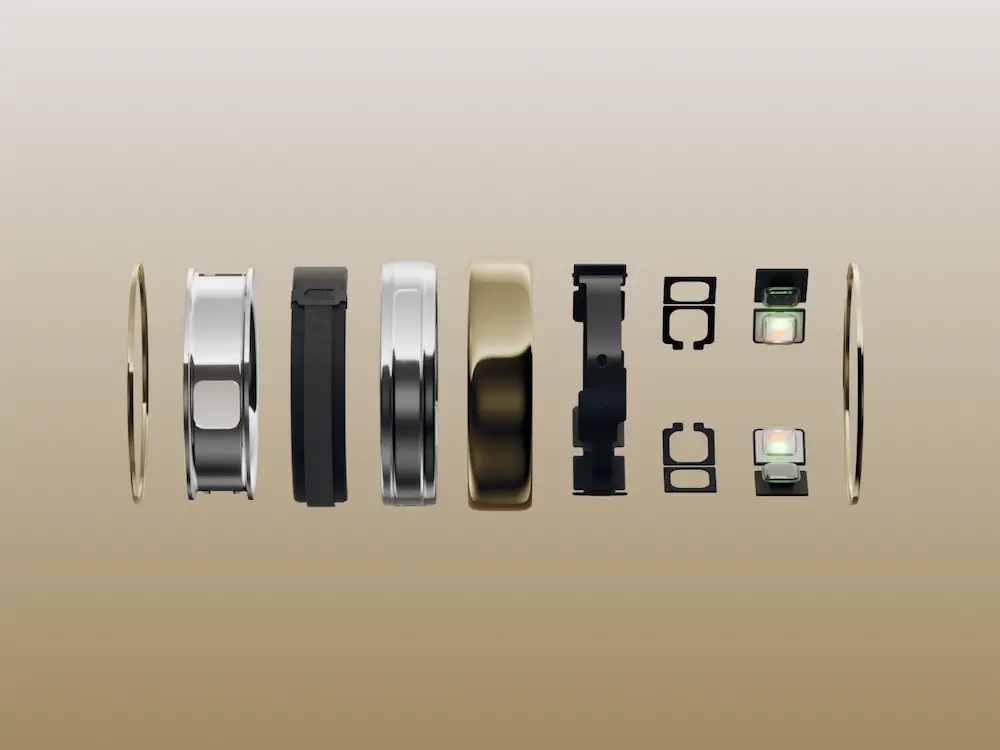
The founders' early technical insight was mechanical as much as strategic: a finger produces a stronger, cleaner pulse signal than a wrist, enabling more accurate heart rate variability and respiratory readings than the wrist-worn trackers that dominated the category. Early development was supported in part by Tekes, the Finnish state innovation funding agency, alongside a 2014 seed round from Finnish firm Lifeline Ventures and Proxy Ventures.
Funding the first ring, and an early American tilt
Oura's first ring was shown publicly at the San Francisco Launch Festival in March 2015, months before it reached the wider public through a Kickstarter campaign that August. The campaign hit its $100,000 target within 15 hours and closed 37 days later having raised roughly $650,000 from about 2,400 backers.
One detail from that round has aged into real significance: Oura's 2016 Series A, a €5 million round backed by MIT Media Lab's Joi Ito and Skype founding engineer Jaan Tallinn among others, drew more than 70% of its capital from US investors — and by the company's own account at the time, over 70% of its sales and 75% of its equity funding already originated in the US. This wasn't a European company that later pivoted toward America; American capital and American customers were central to Oura's business almost from its first institutional funding round, years before formal US corporate presence existed.
Manufacturing and early growth
Production has remained close to home throughout Oura's growth: the company has manufactured its rings in Finland and Estonia, pairing Nordic design and quality control with regional manufacturing capacity rather than shifting production to Asia, as many competitors in wearables have. The second-generation ring debuted at Slush, Helsinki's flagship startup conference, in November 2017 — a moment the company has since pointed to as a turning point in its visibility among investors and press.
Growth through the late 2010s was steady rather than explosive: by 2020, Oura had sold around 150,000 rings, a respectable but modest figure. What changed that trajectory was external. As COVID-19 spread in 2020, research institutions including UCSF's Osher Center for Integrative Health and the WVU Rockefeller Neuroscience Institute began studying whether wearables could provide early illness detection — and Oura's continuous physiological monitoring made it a natural research partner. Sales more than tripled within roughly a year, reaching around 500,000 devices by mid-2021 and passing one million by March 2022.
Leadership shifts toward an American center of gravity
Oura's leadership history tracks its shifting geography closely. Harpreet Singh Rai, an American former hedge fund manager, first invested in Oura and joined its board in September 2016, became president in May 2017 — relocating from New York to San Francisco to take the role — and was named CEO in 2018. Under his leadership, Oura built out its sports partnerships (the NBA, UFC, NASCAR, and Red Bull Racing in Formula One among them) and its celebrity following, while growing its American headcount faster than its Finnish one.
Singh Rai departed in December 2021, and in April 2022 Oura named Tom Hale as CEO — a deliberate, explicitly pre-IPO hire. Hale had taken SurveyMonkey's parent company Momentive public in 2018 and previously helped guide HomeAway through its sale to Expedia. Forerunner Ventures' Eurie Kim, who chaired Oura's board, was candid at the time about why: public-market experience was central to the decision, and Forerunner had, in her words, "the aspiration to take this company far and wide" including a path to going public.
A board built for what came next
That statement is borne out by what followed: the board's composition over the next several years reads as a deliberate execution of it. Kim joined Oura's board in 2019 and became chair that same year, holding the role through 2025 — a period spanning both CEO transitions, the entire run-up in valuation from roughly $2.55 billion to near $11 billion, and the eventual legal Americanization of the company. David Shuman, a board member since 2016, succeeded Kim as chair in October 2025, timed to the company's Series E round. Alongside that transition, Oura added Wen Hsieh — an electrical engineer, former Kleiner Perkins managing partner, and board chairman at semiconductor company Ambiq Micro — and Jason Kelly of TCG (The Column Group), one of the more prominent life-sciences and biotech-focused venture firms in the US.
The sequence reads less like a series of independent hires and more like capability being deliberately stacked in advance of where the company needed to go. A founder-led board gave way, in 2019, to Silicon Valley governance discipline under Kim — which then, in 2022, produced a CEO hired specifically for public-market readiness. That readiness became visible seven years later, in 2026, through a confidential IPO filing and a full legal restructuring. Separately, the 2025 additions of Hsieh and Kelly — hard-technology and life-sciences expertise respectively — arrived at almost exactly the moment Oura's ambitions were shifting from consumer wearable toward a genuine medical-grade health platform, complete with FDA clearance efforts and an expanding defense-sector relationship. The Hsieh appointment also brings a notable parallel in domain expertise: he chairs Ambiq Micro, a semiconductor company specializing in the ultra-low-power chip technology that smart rings and similar wearables depend on — precisely the kind of hardware-level capability the board was adding at this stage of Oura's growth. Kim's own path through the company reads like a quiet through-line beneath much of what follows: she invested early, joined the board, chaired it through its steepest period of change, and — by colleagues' account — was among the first to point Oura toward a public-market future, years before that future arrived.
Scaling the capital base
Oura's valuation climbed in step with this governance evolution: roughly $2.55 billion at Hale's 2022 appointment, $5.2 billion at a Series D in December 2024 led by Fidelity Management, and close to $11 billion following an $875 million Series E in late 2025. Headcount scaled in parallel — from fewer than ten US-based employees a year after founding, to around 250 by 2021, already majority US-based at that point, to an estimated 1,200 to 1,500 employees globally by 2026. Each funding round also drew in a heavier concentration of American growth capital — Google's Gradient Ventures and Square Inc. featured among earlier backers, while Forerunner Partners (San Francisco) and Bedford Ridge (New York) now rank among Oura's largest shareholders, with early Finnish backer Lifeline Ventures still present but now a smaller shareholder by comparison.
Building the sales engine, one channel at a time
For its first eight years, Oura sold almost exclusively direct-to-consumer through its own website, growing through word-of-mouth, athlete and celebrity adoption, and research partnerships rather than paid retail distribution. Two deliberate shifts changed that. In October 2021, alongside the launch of its third-generation ring, Oura introduced a monthly membership fee — $5.99 at launch — layered on top of the upfront hardware purchase, gating the app's full health insights behind an ongoing subscription rather than a one-time sale, converting a single hardware transaction into a recurring revenue stream well before most competitors in the category did the same.
Physical retail came later still, and narrowly. Oura's first large-scale retail partnership launched in April 2023 with Best Buy — 850 US locations, including 50 dedicated store-within-store formats — a deliberate choice CMO Doug Sweeny described directly: "When we started thinking about what retailers to partner with, we continuously went back to Best Buy." Canada followed in October 2023, and Amazon was added as an authorized, Oura-fulfilled storefront in March 2024. What stands out is the restraint: rather than chasing the widest possible shelf space, Oura built its retail footprint around a small number of deliberately chosen partners — led by Best Buy — while working to keep resale of its product on other platforms authorized and controlled. Retail today accounts for an estimated one-fifth of new customer acquisition, functioning as a tactile, brand-building complement to a direct-to-consumer engine that remains the primary channel.
The throughline for other companies weighing their own go-to-market sequencing: Oura layered in recurring revenue before it broadened distribution, and broadened distribution selectively — choosing a single premium retail partner over the widest possible shelf space, and defending that narrowness aggressively once achieved.
Catching the moment: Oura Advisor
Oura's product innovation has kept pace with the broader AI shift in consumer technology, and done so with a specificity worth examining rather than treating as a generic feature checkbox. Oura Advisor, an in-app conversational AI assistant, launched in beta in July 2024 through Oura Labs, the company's opt-in experimental feature program, before exiting beta and rolling out to all English-language users globally in March 2025. Rather than simply displaying sleep, readiness, and activity metrics as static numbers, Advisor lets users ask questions directly and receive contextualized, conversational answers drawn from their own biometric history.
The sharper move came in April 2026, when Oura launched its first proprietary large language model, trained specifically for women's health questions and developed with board-certified OB-GYNs and clinicians, covering everything from menstrual cycle tracking through pregnancy and menopause. This followed a disclosure by Chief Commercial Officer Dorothy Kilroy that Oura's fastest-growing user segment was women in their early twenties, not the athletic performance demographic the brand is often associated with. Building a dedicated, clinically-reviewed model for that specific segment reflects a data-informed product decision, not a reflexive one — evidence that Oura's AI investment is directed by what its own usage data shows.
How patience won the Pentagon
Oura's relationship with the US Department of Defense, now its largest enterprise customer, is an instructive case for any foreign-founded company navigating the US government market — historically one of the hardest to enter on trust alone.
The relationship began in 2019 as a research partnership, not a commercial pitch. The Naval Health Research Center launched a program to study crew fatigue risk aboard active vessels, selecting the Oura Ring to track sleep and biometrics across 1,600 sailors on the USS Gerald R. Ford. Entering through evidence generation tied to a specific, documented operational problem gave Oura a foundation of institutional trust years ahead of any large contract.
The second element was infrastructure. Defense data requires strict clearance — Oura's DoD offering operates at Impact Level 5 — and rather than building compliant government-cloud infrastructure independently, Oura routed its offering through Palantir's FedStart service, a compliance layer purpose-built for federal vendors. This allowed a mid-sized hardware company to meet a security bar that would otherwise have demanded years and significant capital.
By 2025, the Department of Defense had become Oura's largest enterprise customer, prompting a dedicated manufacturing facility in Fort Worth, Texas, built specifically to serve defense contracts. Taken together, the sequence — a research relationship built well ahead of any commercial ask, infrastructure borrowed rather than built from scratch, and physical onshoring once the relationship had proven itself — reflects a deliberate, patient approach to a market that rarely rewards a faster one. What emerges is less a formula than a case study in what sustained, evidence-led engagement with a demanding customer can achieve over time.
Becoming, formally, an American company
That capital and governance shift became structural in early 2026. Oura completed a "Delaware flip" in February, installing a new US-incorporated parent company, Oura Inc., in place of Finnish entity Oura Health Oy, while keeping core engineering, product, and innovation work anchored in Finland. A confidential US IPO filing followed in May, and in August the company purchased a permanent San Francisco headquarters at 500 Pine Street — notably choosing to preserve the building's original fireplace and weave Nordic design details through its renovation, a small but deliberate act of protecting the origin story even as nearly everything else about the company globalized.
The road ahead
Oura's path is less a company "expanding into America" and more a company whose capital and customers were substantially American from a very early stage — spending the following decade building the team, the governance, and eventually the structure to match that reality, through specific, traceable decisions: a board chair installed in 2019 who set a public-market destination; a CEO hired in 2022 for that exact purpose; a commercial engine that layered recurring revenue before broadening distribution, and broadened it narrowly when it did; a defense relationship built patiently through research rather than sales, later reinforced with US manufacturing; and board seats added in 2025 for capabilities the company would need next, one of which turned out to already sit inside its own hardware.
What Americanized, consistently, was the commercial, financial, and governance layer — the parts of the business that had to sit closest to its customers and capital. What stayed distinctly Finnish was the engineering and design core that determines what the Oura Ring actually is. By 2026, the legal and physical structure of the company had simply caught up to a reality that had been taking shape, decision by decision, for years — a reminder that scaling into a market this size opens more doors than it closes, for the parts of a company willing to grow toward it.
Sources: ouraring.com, forbes.com, techcrunch.com, bloomberg.com, nordic9.com